Crete to Rhodes by Ferry: The Dodecanese Route (2026)
The forgotten ferry route east from Crete — Sitia and Heraklion to Kasos, Karpathos, Chalki and Rhodes. Durations, frequencies, and why almost nobody takes it.
The Route Nobody Takes
Everyone leaving Crete by sea goes north-west into the Cyclades. Almost nobody goes east.
That is a shame, because the Dodecanese route — running from eastern Crete through Kasos, Karpathos and Chalki to Rhodes — reaches some of the least-visited islands in Greece, and it is barely covered in English-language travel writing. Karpathos in August has a fraction of the visitors that Naxos does.
It is also genuinely harder. Sailings are infrequent, schedules shift, and getting it wrong can cost you two days. This guide is about deciding whether it is worth it, and planning it properly if it is.
The Route
| Leg | Duration | Frequency |
|---|---|---|
| Sitia → Kasos | ~2–3h | Part of the Dodecanese run |
| Sitia → Karpathos (incl. Diafani) | ~3h30–4h45 | ~4 sailings/week |
| Sitia → Chalki | Varies | Limited |
| Sitia → Rhodes | ~7h30 | The eastern terminus |
Operators include ANEK / Aegeon Pelagos, Blue Star Ferries and Kasos Princess. Services also run from Heraklion, but less often — the route is centred on Sitia.
Sitia additionally connects west and north to Santorini, Anafi, Milos (June–September, just over 2h30 by high-speed catamaran) and Piraeus.
Check current sailings: Sitia departures — this route’s timetable moves more than most, and last season’s pattern is not a reliable guide.
Start From Sitia, Not Heraklion
This is the main planning point. Sitia is in the far east of Crete, roughly a three-hour drive from Heraklion along the north coast via Agios Nikolaos. It has its own small airport with domestic connections.
If the Dodecanese are your goal, treat Sitia as the departure point and build the Cretan leg toward it — the same west-to-east logic that governs the Cyclades route, just carried further. Trying to catch a Dodecanese ferry from Heraklion means either a rare direct sailing or a long drive on the day, which is exactly the kind of tight connection this route punishes.
Give yourself a night in Sitia before an early departure. It is a pleasant, entirely untouristy harbour town — worth the stop on its own terms.
What You Get
Karpathos is the highlight: a long, mountainous island with fierce winds on the east coast (it is a serious windsurfing destination), empty beaches, and Olympos in the north — a village that stayed isolated long enough to keep its own dialect and dress, reachable by a spectacular road or by boat from Diafani.
Kasos is smaller and quieter still, with barely any tourist infrastructure. That is the appeal.
Chalki is tiny, pretty, and a short hop from Rhodes.
Rhodes is the opposite of all of them — a major destination with an international airport, a UNESCO old town, and plenty of visitors. Which makes it a sensible place to end and fly home from.
The Difficulties, Honestly
Frequencies are thin. Four sailings a week on the best-served leg, fewer elsewhere, and fewer again outside summer. Miss one and you may wait two days.
Schedules change. This route sees more operator and timetable churn than the Cycladic mainlines. Verify against a live schedule close to travel, not months out.
Onward connections are limited. From Karpathos or Kasos your options are the same ferry back or a small domestic flight. Build in slack.
Facilities are basic. These are small islands. Bring cash, do not count on last-minute accommodation in August, and check whether car hire exists before assuming it does.
Who Should Take It
Yes, if: you have two weeks or more, you have done Greek island-hopping before, you want somewhere that does not feel processed, and you are comfortable with a schedule that has real gaps in it.
No, if: it is your first Greek island trip, you have a week, you need reliable connections, or a missed sailing would break your flight home.
For most travellers the honest recommendation is the Cyclades route — more frequent, more forgiving, and beautiful in its own right. See Crete to the Cyclades.
Planning It
- Fly into Chania or Heraklion, work east, ending in Sitia. Our sister site covers the western end at Stay In Chania, and the Crete island hopping itinerary explains the west-to-east logic.
- Night in Sitia before the sailing — see hotels in Sitia.
- Book the ferry as early as the schedule allows. Capacity is small.
- Leave two spare days before any international flight.
- Fly home from Rhodes rather than backtracking to Crete.
The full list of what leaves Crete by sea, including this route, is in ferries from Heraklion.
Keep reading
 informational
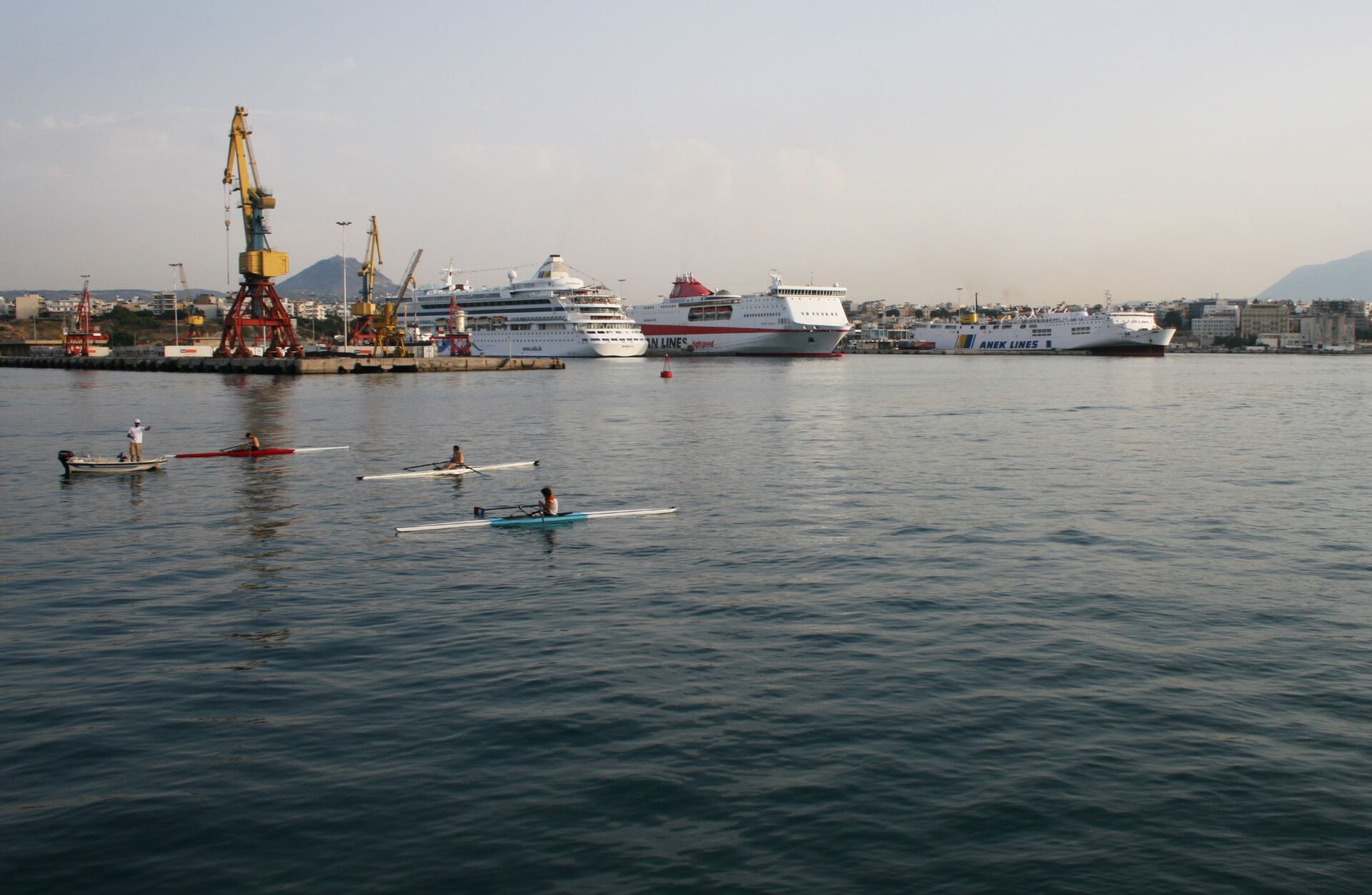
 Arriving in Heraklion: Airport or Port? (And How to Move Between Them)
Heraklion has two front doors 5km apart. Which to arrive at, how to get between airport, port and city, and how to make a same-day ferry off an inbound flight.
 informational
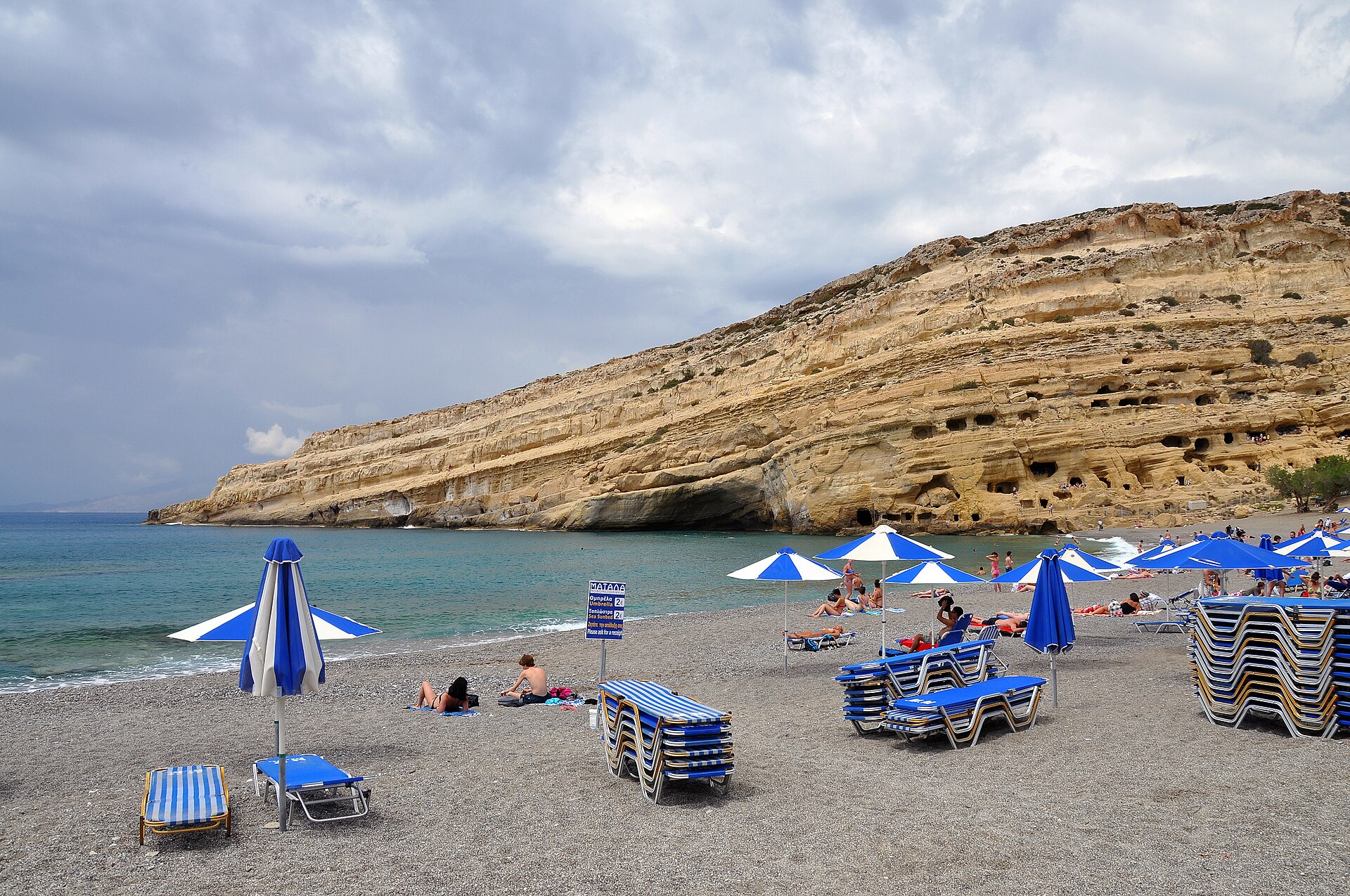
 Crete to the Cyclades: How to Sequence an Island-Hopping Route
Which island order actually works from Crete, how many nights each deserves, and where the ferry gaps bite — the sequencing guide most route planners skip.
hub Ferries From Heraklion: Every Island You Can Reach (2026)
The complete route list from Heraklion port — 16+ destinations across the Cyclades, the Dodecanese and the mainland, with durations, operators, seasons and fares.
Frequently Asked Questions
Can you get from Crete to Rhodes by ferry? ▾
Yes. The Dodecanese route runs east from Crete via Kasos, Karpathos and Chalki to Rhodes. Sailings leave from Sitia in eastern Crete and, less often, from Heraklion. Sitia to Rhodes takes about 7.5 hours.
How long is the ferry from Crete to Karpathos? ▾
About 3 hours 30 minutes to 4 hours 45 from Sitia, depending on the vessel and whether it calls at Kasos first. Roughly four sailings a week.
Is there a direct ferry from Heraklion to Rhodes? ▾
Services do run from Heraklion, but the route is centred on Sitia in eastern Crete, which has more frequent Dodecanese connections. From Heraklion you may need to travel east to Sitia first.
How often do ferries run from Crete to the Dodecanese? ▾
Infrequently — often a few sailings a week rather than daily, and fewer outside summer. This route needs planning around rather than improvising into.
Is the Crete to Rhodes ferry worth taking? ▾
If you want somewhere in Greece that still feels genuinely unvisited in August, yes. Karpathos and Kasos see a fraction of Cycladic visitor numbers. If you want frequent connections and easy logistics, take the Cyclades route instead.