Knossos Palace vs Phaistos: Which Minoan Site Should You Visit?
Both are incredible Minoan palaces, but which one is right for you? We compare accessibility, crowds, history, and value to help you decide.
The Great Minoan Debate: Knossos or Phaistos?
If you’re visiting Crete and fascinated by Minoan civilization, you’ll likely be torn between visiting Knossos Palace and Phaistos Palace. Both are UNESCO-recognized Minoan palace complexes, both are architecturally stunning, and both tell the story of Europe’s first advanced civilization.
But they offer very different experiences. Here’s our detailed comparison to help you choose.
Accessibility
Knossos is located just 5km south of Heraklion city center. It’s easily reachable by public bus (KTEL bus #2 from the center), taxi (10 minutes), or on foot (about 45 minutes). Most Heraklion hotels can arrange tours.
Phaistos is 62km southwest of Heraklion, in the Messara Plain. You’ll need a rental car (about 1 hour drive) or an organized tour. The drive is scenic, passing through traditional Cretan villages.
Winner: Knossos — for ease of access, especially if you don’t have a car.
Crowds
Knossos receives over 600,000 visitors per year. In summer, it can be extremely crowded, especially when cruise ships are in port. Expect queues for tickets and crowded pathways.
Phaistos receives a fraction of Knossos’s visitors. Even in July and August, you can explore the ruins in relative peace. The site is spacious, so even when there are other visitors, it never feels crowded.
Winner: Phaistos — for a peaceful, contemplative experience.
Historical Significance
Knossos is the largest and most important Minoan palace. It was the center of Minoan civilization under King Minos and is associated with the myths of the Minotaur and the Labyrinth. The site was continuously inhabited from 7000 BC to the Roman period.
Phaistos is the second-largest Minoan palace and was the dominant center of southern Crete. It’s famous as the discovery site of the Phaistos Disc, a clay disc with mysterious spiral-inscribed hieroglyphs that remains undeciphered to this day.
Winner: Knossos — for sheer historical importance, though Phaistos is a close second.
Reconstruction
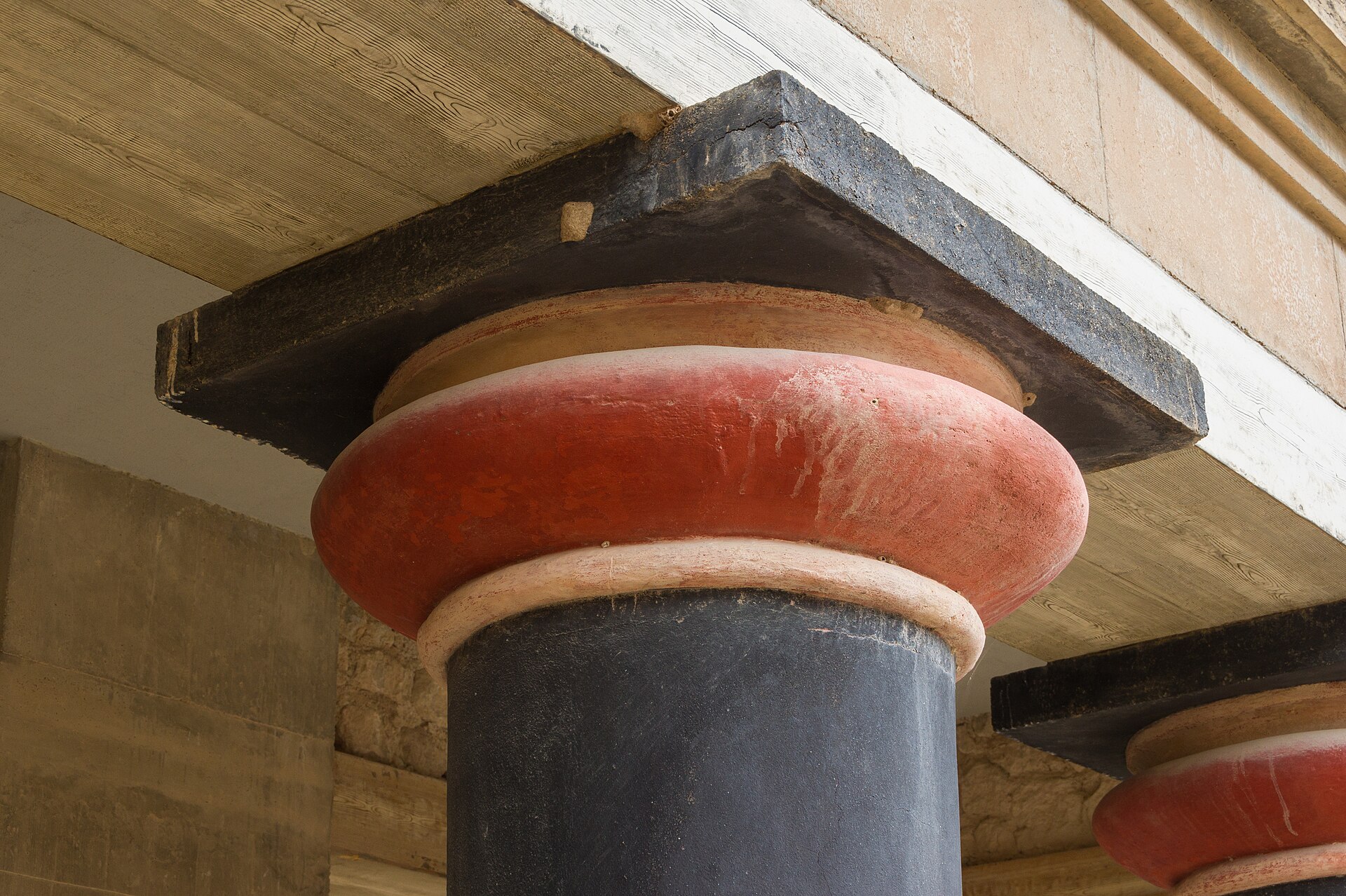
Knossos was partially reconstructed by British archaeologist Sir Arthur Evans in the early 1900s. Evans’s reconstructions — including the iconic red columns and the Throne Room — are controversial. Some scholars argue they’re inaccurate, but they make the site much easier to visualize for non-experts.
Phaistos is largely unrestored. You see the ruins as they were found, which gives a more authentic archaeological experience but requires more imagination to visualize the original structures.
Winner: Phaistos — for archaeological authenticity. Knossos wins if you prefer a more visual, accessible experience.
Value for Money
Knossos costs €15 for entry (€8 reduced). The site is well-maintained with good signage, a cafe, and a gift shop. Combined tickets with the Archaeological Museum are available.
Phaistos costs €8 for entry (€4 reduced). Facilities are more basic — a small parking area and minimal signage — but the lower price and peaceful atmosphere offer excellent value.
Winner: Phaistos — for better value.
Our Verdict
Choose Knossos if: You’re a first-time visitor to Crete, you’re short on time, you have children, or you want to see the most famous Minoan site.
Choose Phaistos if: You’re a history enthusiast seeking a quieter experience, you have a rental car, you’ve already visited Knossos, or you prefer authentic ruins over reconstructions.
Best option: Visit both. Start with Knossos in the morning (arrive by 8am to beat crowds), then drive to Phaistos for a peaceful afternoon exploration. It’s a long but rewarding day.
Keep reading
informational Heraklion Archaeological Museum: The Complete Visitor Guide (2026)
Everything you need to visit the Heraklion Archaeological Museum — the world's greatest Minoan collection. Highlights, tickets, the combined Knossos ticket, opening hours and how long you need.
 informational
 Archanes & the Peza Wine Country: Heraklion's Best Half-Day (2026)
A guide to the Archanes and Peza wine villages south of Heraklion — the wineries to visit, indigenous Cretan grapes to try, the restored village of Archanes, and how to plan a wine day.
 listicle
 Best Beaches Near Heraklion: 8 Spots Worth the Drive (2026)
From the long sands of Ammoudara to the caves of Matala and the palms of Vai, here are the best beaches near Heraklion, Crete — with honest notes on crowds, facilities, and how to get there.
Comparison Summary
| Category | Knossos Palace | Phaistos Palace | Winner |
|---|---|---|---|
| Accessibility | 5km from Heraklion city, easily reachable by bus, taxi, or tour | 62km from Heraklion, requires a car or organized tour | Knossos Palace |
| Crowds | Very busy, especially in summer with cruise ship passengers | Quiet and uncrowded even in peak season | Phaistos Palace |
| Historical significance | The largest Minoan palace, center of Minoan civilization | Second largest palace, site of the famous Phaistos Disc discovery | Knossos Palace |
| Reconstruction | Partially reconstructed by Sir Arthur Evans — controversial but vivid | Largely unrestored — more authentic but harder to visualize | Phaistos Palace |
| Value for money | €15 entry, well-maintained, good facilities | €8 entry, fewer facilities but more peaceful experience | Phaistos Palace |
| Best for | First-time visitors, families, those short on time | History enthusiasts, return visitors, those seeking tranquility | Tie |
Frequently Asked Questions
Can you visit both Knossos and Phaistos in one day? ▾
Yes, but it's a long day. We recommend visiting Knossos in the morning (when it's less crowded) and driving to Phaistos in the afternoon. Allow 2-3 hours at each site.
Which site is better for children? ▾
Knossos is better for children because of the reconstructed areas that make the palace easier to visualize, plus the on-site facilities and proximity to Heraklion.
Is the Phaistos Disc on display at Phaistos? ▾
No, the Phaistos Disc is on display at the Heraklion Archaeological Museum, not at the Phaistos site itself.